Monday, November 9, 2020

Oil Prices Are Only Going in One Direction

https://www.bloomberg.com/opinion/articles/2020-11-08/coronavirus-lockdowns-oil-prices-are-only-going-in-one-direction 


Oil Prices Are Only Going in One Direction

Fresh Covid-19 lockdowns are likely to reverse an already stalling recovery in oil demand, just as the U.S. and Libya pump more crude.
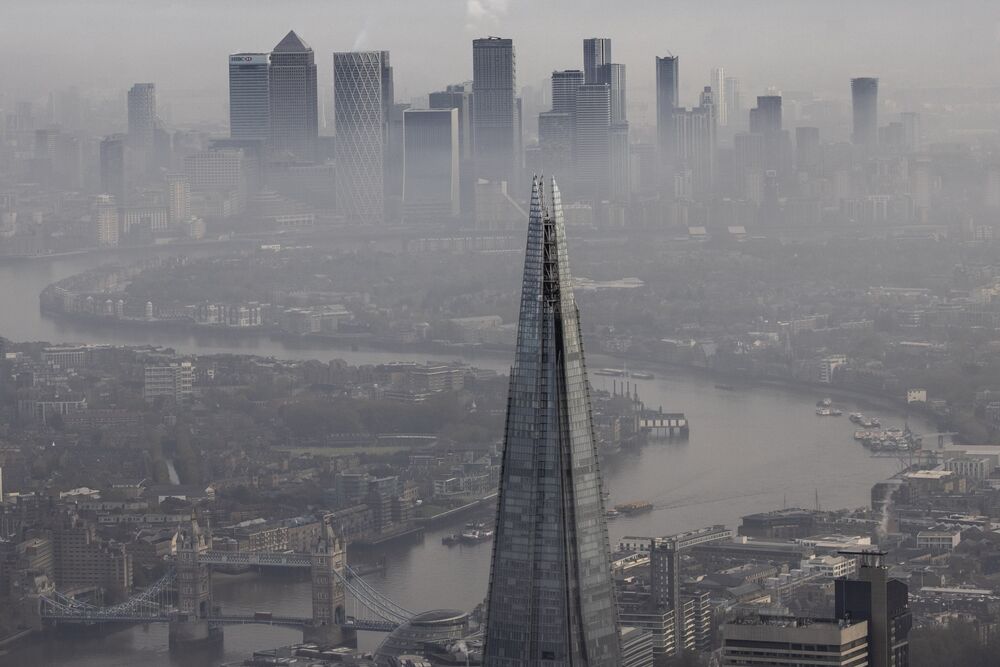
Traffic on London streets fell sharply as England entered a four-week lockdown.
Traffic on London streets fell sharply as England entered a four-week lockdown. Photographer: Dan Kitwood/Getty Images

This was supposed to be a time when things were getting closer to normal for OPEC. A recovery in oil demand after the first wave of the pandemic, coupled with a deep slump in U.S. production, was meant to leave the world needing more of its members’ crude. But it isn’t turning out like that.

Two things have conspired against the Organization of Petroleum Exporting Countries. The coronavirus outbreak is threatening to put an already stalling recovery in oil demand into reverse. At the same time, supply is rising from a variety of sources over which it has no control.

Back in June, OPEC projected that demand for crude from its members would be more than 1 million barrels a day higher than it had forecast in December — before Covid-19 even had a name. By October, it had slashed that estimate by 3.75 million barrels a day, or about as much as is pumped by the group’s second-largest member, Iraq.

Faltering Expectations

OPEC's assessment of how much of its crude the world needs this quarter has slumped on weaker demand and stronger supply

Source: Organization of Petroleum Exporting Countries

Note: The x-axis shows the month the forecast was published

The world’s failure to deal effectively with the pandemic has seen countries across Europe — from the U.K. and France to Greece — impose a fresh round of restrictions on their populations, including measures such as closing bars, restaurants and non-essential shops and limiting travel. There are concerns, too, that virus cases could spike again in the U.S. after a frenzy of election rallies and post-poll protests, prompting more stay-at-home orders and sapping oil demand there.

On Thursday, England entered a four-week lockdown. Although the restrictions aren’t as severe as those imposed in March — schools and some businesses, for example, remain open — traffic on city streets has already fallen sharply. It is unlikely to drop as far as it did during the first lockdown, as those who can travel shun public transport in favor of private cars, but the decline will still have a measurable impact on oil consumption.

Second Shutdown

London traffic levels are falling, but shouldn't drop as far as they did in March

Source: Bloomberg calculations using data from TomTom Traffic Index

Note: Additional time taken for a journey that would last an hour in uncongested conditions.

Cold winter weather may help to support fuel demand, but little of that will be in the form of oil. Liquid fuel is not widely used for heating in the U.K. In Germany, where it is more common, consumers have already stocked up ahead of winter — although they may top up tanks ahead of a carbon tax that comes into effect in January. The government there imposed a partial lockdown on Monday.

Even in Asia, where economic activity and oil demand is returning more quickly to pre-pandemic levels, producers are still waiting to see the full benefit. Japan, the region’s third-biggest oil consumer behind China and India, has slashed crude imports by more than one-third since the start of 2019. Imports from the five big crude exporting countries in the Persian Gulf have fallen by almost half.

Dwindling Market

Persian Gulf oil producers have been hit hard by the slump in Japanese buying

Sources: Japan's Ministry of Economy Trade and Industry, tanker tracking data monitored by Bloomberg

Note: The Persian Gulf-5 are Saudi Arabia, the United Arab Emirates, Kuwait, Qatar and Iraq. Ships departing the Persian Gulf in the next few days could still reach Japan this month, potentially increasing the November number

Its oil imports are likely to remain sluggish near current levels for the rest of year, because refiners have had to import contracted crude volumes despite low fuel demand. That’s resulted in a build-up of stockpiles that will take time to draw down.

The OPEC oil producers are also facing unexpected competition, both from outside the group and within it.

In the U.S., production is expected to pick up in the short term as drilling rates rise and hurricanes abate. A succession of storms crossing the Gulf of Mexico have reduced output there by more than 500,000 barrels a day on average since August 22.

Battered

Storms have cut nearly 40 million barrels of Gulf of Mexico production since mid-August

Source: Calculations based on Bureau of Safety and Environmental Enforcement data

Note: On days when there were no reports from the BSEE, we have halved the lost production each day working both forwards and backwards from the nearest day on which a report was published. The estimated volumes account for 4% of the total lost production.

What’s more, American oil exporters are making big inroads into one of OPEC’s core markets — China. In September, the Asian nation imported more crude from the U.S. than from anywhere else other than Saudi Arabia and Russia. Shipments from Iraq, the country’s third-largest supplier last year, have almost halved since May, while those from the U.S. have risen sevenfold. Purchases for the rest of the year are likely to remain subdued as private refiners have used up their 2020 import quotas.

As if that weren’t enough, OPEC member Libya, which is exempt from the group’s output restrictions, is restoring production after opening export ports that were idled by war for most of 2020. The country plans to export more than 800,000 barrels a day of crude this month — about eight times as much as it shipped in August. OPEC hasn’t yet factored that volume into its calculations.
 
The OPEC+ alliance, which unites the 13 OPEC members and nine external allies (Mexico no longer plays a meaningful role after its refusal to accept output cuts negotiated in April), must consider its next move. The current plan is to ease output reductions on Jan. 1, adding another 1.9 million barrels a day to the market. It is increasingly clear that’s not doable without sending oil prices spiraling lower.

With members already chafing at the restrictions, the group’s next meeting at the start of December is likely to be a tense affair.

— With assistance by Elaine He

    This column does not necessarily reflect the opinion of the editorial board or Bloomberg LP and its owners.

    To contact the author of this story:
    Julian Lee at jlee1627@bloomberg.net

    To contact the editor responsible for this story:
    Melissa Pozsgay at mpozsgay@bloomberg.net

    Tuesday, October 27, 2020

    Large and In Charge? Giant Firms atop Market Is Nothing New.


    Large and In Charge? Giant Firms atop Market Is Nothing New.

    Contributor Image
    Wes Crill

    Vice President, Research

    Dimensional Fund Advisors

    While the types of businesses most prominent in the market vary through time, the fact that a small subset of companies’ stocks account for an outsized portion of the stock market is not new. Moreover, research suggests these stocks’ best performance might be in the rearview mirror. The takeaway is that relying on well-established investing principles such as broad diversification helps ensure investors have exposure to a vast array of companies and sectors, potentially providing a more reliable approach to achieving their investment goals.

    History Repeats

    In 1967, the largest 10 stocks accounted for over 20% of market capitalization, and a marquee technology firm, IBM, was perched at No. 1. This sounds like a description of the current US stock market, dominated by Apple and the other FAANG stocks (Facebook, Amazon, Apple, Netflix, and Google, a subsidiary of Alphabet). Back then, however, IBM represented a larger portion of the market than Apple at the end of 2019 (5.8% vs. 4.1%).

    As we see in Exhibit 1, it is not particularly unusual for the market to be concentrated in a handful of stocks. The combined market capitalization weight of the 10 largest stocks, just over 20% at the end of last year, has been higher in the past.

    A breakdown of the largest US stocks by decade shows some companies have stayed on top for a long time (see Exhibit 2). AT&T was among the largest two for six straight decades beginning in 1930. General Motors and General Electric ranked in the top 10 at the start of multiple decades. IBM and Exxon were also mainstays in the second half of the 20th century. Hence, concentration of the stock market in a few large companies such as the FAANG stocks in recent years is not a new normal; it is an old normal.

    Moreover, while the definition of “high-tech” is constantly evolving, firms dominating the market have often been on the cutting edge of technology. AT&T offered the first mobile telephone service in 1946. General Motors pioneered such innovations as the electric car starter, airbags, and the automatic transmission. General Electric built upon the original Edison light bulb invention, contributing to further breakthroughs in lighting technology, such as the fluorescent bulb, halogen bulb, and the LED. So technological innovation dominating the stock market is not a new normal; it is an old normal too.

    Another trend attributed to a new normal is the extraordinary performance of FAANG stocks over the past decade, leading some to wonder if we should expect these stocks to continue such strong performance going forward. Investors should remember that any expectations about the future operational performance of a firm are typically already reflected in its current price. While positive developments for the company that exceed current expectations may lead to further appreciation of its stock price, those unexpected changes are not predictable.

    To this point, charting the performance of stocks following the year they joined the list of the 10 largest firms shows decidedly lower performance  results (see Exhibit 3). On average, these stocks outperformed the market by an annualized 0.7% in the subsequent three-year period. Over five- and 10-year periods, these stocks underperformed the market on average.

    The only constant is change, and the more things change the more they stay the same. This seems an apt description of the dominant stocks atop the market. For investors, the implications may be that (1) a stock market concentrated in handful of stocks is not necessarily a reason to reevaluate one’s investment approach and (2) the lackluster performance of stocks after they reach the top of the market serves as a reminder of the importance of broad diversification.https://www.indexologyblog.com/2020/10/26/large-and-in-charge-giant-firms-atop-market-is-nothing-new/

    Thursday, October 22, 2020

    Green Illusions | Ozzie Zehner | Talks at Google

    https://www.youtube.com/watch?v=v6uVnyjTb58 


    Ten years from now, will we think of renewable energy as clean and green? Emerging research on the side effects and limitations of solar cells, wind turbines, biofuels, electric cars and other alternative energy strategies will likely transform conventional wisdom about what's green, and what's not. Which players will be left in the dust? Who will innovate the next green revolution? And how? The Sunday Times describes Ozzie Zehner an "an academic who is causing shockwaves." He is the author of Green Illusions and a visiting scholar at the University of California, Berkeley. He lectures at universities and public policy organizations."

    Monday, October 19, 2020

    World’s Biggest Fracker Sees Signs of Rebirth as Slump Ebbs

     Halliburton Co. expects the rout in North American shale to peter out after history’s worst crude crash decimated many of its customers.

    The world’s biggest provider of fracking signaled that attrition among oilfield service companies is beginning to show results and, in North America at least, a bottom may have been reached, according to a statement on Monday. Overseas is another story, however, because orders there are still weak.

    In an illustration of how deeply Halliburton has cut to cope with the crisis, executives revealed Monday that half the company’s North American workforce has been eliminated in the past year. Industrywide, almost one-third of fracking gear has been junked.

    The shares rose 3.2% to $12.64 at 10:04 a.m. in New York, after earlier dropping as much as 3.3%.


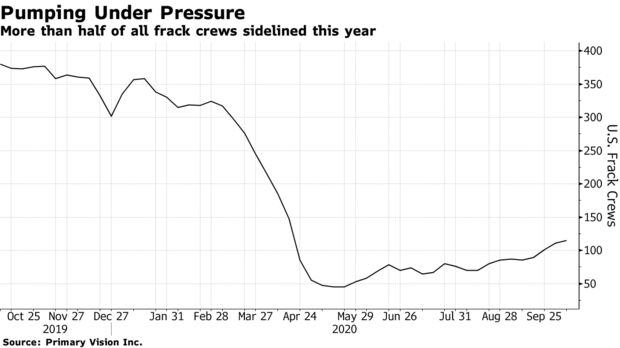
    More than half of all frack crews sidelined this year

    “The pace of activity declines in the international markets is slowing, while the North America industry structure continues to improve, and activity is stabilizing,” Chief Executive Officer Jeff Miller said in the statement.

    The brightening domestic outlook was partly overshadowed by ConocoPhillips’s deal to buy Concho Resources Inc. in a $9.7 billion takeover that will mean one less customer for Halliburton’s services. The combination will result in $500 million in cost cuts, much of those from reduced oil and natural gas exploration.

    Oil exploration in North America, which has long been Halliburton’s primary cash cow, has atrophied amid lower crude prices and a global pandemic that sapped energy demand. Customer spending in the U.S. and Canada is contracting for the fourth time in six years and hovering at levels not seen in almost a quarter century, according to Evercore ISI.

    Almost two-thirds of Halliburton’s sales came from overseas markets for a second straight quarter, a historic shift for the company.

    Excluding severance costs and other charges, Halliburton’s 11-cent per-share profit surpassed the 8-cent average estimate of analysts in a Bloomberg survey. Sales of $3 billion were just shy of the $3.1 billion average forecast.

    Changing Course

    The 101-year-old oilfield-service provider is in the midst of what it calls a “fundamentally different course” that involves cutting more than $1 billion in costs and looking outside of North America for better growth. Miller has also dismissed thousands of workers and clipped Halliburton’s dividend.

    But growth in oilfield work anywhere in the world will be hard to come for an extended period. Larger rival Schlumberger warned investors late last week not to expect growth over the final three months of the year and said it’ll be 2022 before overseas drilling picks up.

    Hydraulic fracturing, which blasts water, sand and chemicals underground to release trapped hydrocarbons, could see a slight uptick thanks to the mountain of pre-drilled wells waiting to be completed, Schlumberger executives said. After plummeting to a record low in May, the number of frack crews working in U.S. fields has climbed back above 100, but is still down by more than half since the start of the year, according to Primary Vision Inc.

    (Updates with scale of job cuts in third paragraph, geographic sales in eighth paragraphhttps://www.bloomberg.com/news/articles/2020-10-19/world-s-biggest-fracker-sees-signs-of-rebirth-as-slump-bottoms

    Vanguard Now Has the First Trillion-Dollar Fund—Sort Of

    https://www.barrons.com/articles/stocks-are-down-but-this-fund-is-upvanguard-now-has-the-first-trillion-dollar-fund-51599166291 


    Investors saw no shortage of record-breaking stock news in August: The S&P 500 hit an all-time high just five months after the coronavirus selloff, and tech giant Apple (ticker: AAPL) became the first U.S. company with a $2 trillion market value. Today’s milestone is in the fund world: The Vanguard Total Stock Market Index has become the first to have more than $1 trillion in assets in funds tied to it.

    “It’s been a decade of index funds,” says Jeff DeMaso, research director at Adviser Investments, an independent advisory...

    Wednesday, October 14, 2020

    Dirty Harry of the Oil Market (guest: Tracy Shuchart) - Market Huddle Ep.98

    https://www.youtube.com/watch?v=DLOv5qC1r7Y 


    In episode #98, Patrick Ceresna and Kevin Muir welcome to the show, oil specialist and internet sensation, Tracy Shuchart, otherwise known as @chigrl. No WTF clip this week but stick around for No Stupid Questions and Skin in the Game.


    Thursday, October 8, 2020

    The Most Dovish Fed in History Is on a Mission to Spur Inflation

    https://www.bloombergquint.com/businessweek/federal-reserve-chair-jerome-powell-is-on-a-mission-to-spur-inflation#:~:text=(Bloomberg%20Businessweek)%20%2D%2D%20Federal%20Reserve,in%20front%20of%20Fed%20headquarters.


    (Bloomberg Businessweek) -- Federal Reserve Chair Jerome Powell has done everything to demonstrate his desire for higher inflation short of dressing up as a dove and cooing in front of Fed headquarters. In August he unveiled a policy that not just tolerates but seeks periods of inflation above the Fed’s 2% target. “The labor market is recovering, but it’s a long way—a long way—from maximum employm

    Read more at: https://www.bloombergquint.com/businessweek/federal-reserve-chair-jerome-powell-is-on-a-mission-to-spur-inflation
    Copyright © BloombergQuint