Thursday, August 1, 2024

Nvidia Could Be Worth Nearly $50 Trillion In A Decade, Says Early Tesla, Amazon Investor: Nearly 2X That Of US Or 3X Of China's Current GDP


Nvidia Could Be Worth Nearly $50 Trillion In A Decade, Says Early Tesla, Amazon Investor: Nearly 2X That Of US Or 3X Of China's Current GDPhttps://finance.yahoo.com/news/nvidia-could-worth-nearly-50-131509521.html


A prominent tech investor predicted that NVIDIA Corp. (NASDAQ:NVDA) could achieve a market capitalization of nearly $50 trillion within the next decade.

What Happened: James Anderson, an early investor in companies like Tesla Inc (NASDAQ:TSLA) and Amazon.com Inc (NASDAQ:AMZN), expressed his bullish outlook on Nvidia’s future potential, reported the Financial Times on Sunday. He suggested that the chipmaker’s market cap could potentially surpass the combined value of the current S&P 500.


"The potential scale of Nvidia in the most optimistic outcome is both way higher than I've ever seen before and could lead to a market cap of double-digit trillions. This isn't a prediction but a possibility if artificial intelligence works for customers and Nvidia's lead is intact," Anderson said.

For context, Anderson’s prediction of Nvidia hitting $50 trillion market capitalization would be nearly twice as much as the U.S.’s current gross domestic product (GDP), which stands at $27.36 trillion, or nearly thrice as much as China’s GDP of $17.79 trillion, according to data from the World Bank.


Despite this remarkable growth, Anderson views Nvidia’s potential as even greater, provided that artificial intelligence continues to deliver for customers and Nvidia maintains its lead in the industry.

See Also: Amid the ongoing EV revolution, previously overlooked low-income communities now harbor a huge investment opportunity at just $500.

Anderson, who now runs a $650 million fund at Lingotto Investment Management, believes that Nvidia’s “persistent exponential progress, the competitive advantages in hardware and software, and the culture and leadership are exactly what we look for.”

He also acknowledged that the path to this potential valuation would be volatile, with possible drawdowns of 35-40%. However, he expressed confidence in Nvidia’s long-term prospects, stating that the company is at the forefront of solving serious problems in areas like autonomous driving, robotics, and drug discovery.

Anderson projected that the actual growth in demand for data center AI chips was currently around 60% annually. Looking forward over the next decade, he estimated that sustained 60% growth in data center revenue alone, with unchanged margins, could lead to earnings of $1,350 per share and free cash flow of approximately $1,000 per share.

Trending: Commercial real estate has historically outperformed the stock market, and this platform allows individuals to invest in commercial real estate with as little as $5,000 offering a 12% target yield.

Assuming a 5% free cash flow yield, this analysis suggests that Nvidia shares could potentially be valued at $20,000 in 10 years, implying a market capitalization of $49 trillion. Anderson assigned a probability of 10-15% to achieve this scenario, according to the report.

Why It Matters: The prediction from Anderson comes amid a broader context of excitement and caution in the market. The U.S. stock market has experienced a significant rally, largely driven by the promise of AI. This surge has drawn comparisons to the dot-com bubble of the late 1990s, with the S&P 500 index hitting new highs and the Nasdaq Composite index rising by 70% since the end of 2022.

See Also: This Income Stock Has Outperformed The S&P 500 For Over A Decade

However, not everyone is optimistic. Craig Johnson, a managing director and chief market technician at Piper Sandler, has pointed out “warning flags” in the market, suggesting that Nvidia might be in “bubble-ish territory” and hinting at a potential market pullback.

Even Cathie Wood, CEO of ARK Invest, has acknowledged Nvidia’s exceptional performance but forecasts “short-term indigestion” for the company’s business as customers reassess their AI strategies.

Despite these concerns, some analysts remain bullish. Ray Wang, founder of Constellation Research, has a price target of $200 on Nvidia stock, citing the company’s pivotal role in the AI space.

Anderson gained prominence during his nearly four-decade tenure at Baillie Gifford. He oversaw its flagship Scottish Mortgage Investment Trust, which initially invested in Nvidia in 2016. His leadership played a pivotal role in transforming the Edinburgh-based private partnership into an unexpected standout in the tech investment sector.

Wednesday, July 12, 2023

Soaring Interest Rates Are Quietly Transforming Oil Markets


Soaring Interest Rates Are Quietly Transforming Oil Markets

  • Higher borrowing costs mean price of storing crude increases
  • Inventories are projected to fall in second half of the year
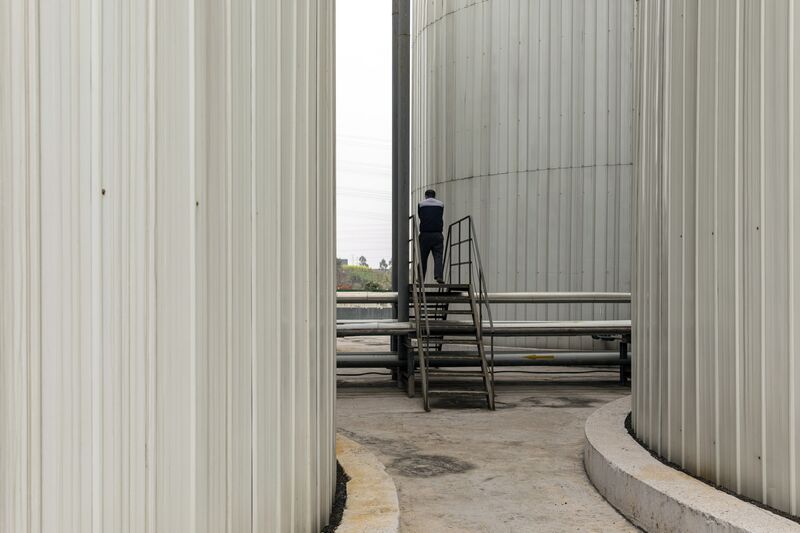
Oil inventories are showing signs of starting to decline.

Oil inventories are showing signs of starting to decline.

Photographer: Qilai Shen/Bloomberg
Updated on
https://www.bloomberg.com/news/articles/2023-07-05/soaring-interest-rates-are-quietly-transforming-the-oil-market
Get Bloomberg's most popular newsletters.
Subscribe now to get the Evening Briefing, Five Things, Matt Levine's Money Stuff, Balance of Power and Tech Daily.
By submitting my information, I agree to the Privacy Policy and Terms of Service and to receive offers and promotions from Bloomberg.

For oil bulls, one of the biggest caps on prices this year is turning into a tailwind. 

Oil’s 10% drop so far in 2023 confounded some analyst and trader expectations of triple-digit prices as China reopened for business following anti-Covid 19 measures.

Instead, one of the most aggressive rate-tightening cycles by central banks in decades has created a perceived drag on demand, while simultaneously incentivizing traders to sell oil held in storage. That boosted short-term supply to the market at a time when Russian and Iranian oil exports also ballooned.

But now, aided by OPEC+ cuts and those same elevated borrowing costs, inventories are showing signs of starting to decline. With the growing cost of money helping to force barrels out of storage tanks, some bulls now argue the market is nearing a tipping point — setting crude prices up for spikes further down the line.

“Nobody wants to hold inventory, and I think we are, as a world, going toward lower inventory forward cover,” Amrita Sen, co-founder and director of research at Energy Aspects said in a Bloomberg TV interview last month. “If you ask me what did I miss this year it has been the rising cost of capital and what that’s doing to the market, which is destocking.” 

Oil Tries to Fight the Fed

Prices have fallen since rates began rising, but some analysts stay bullish

Source: ICE Futures Europe, Bloomberg

The additional costs of storing oil during a period of sustained high interest rates are stark. 

Take a two-million barrel cargo with prices at, say, $80 a barrel. Based on an interest-rates at 5%, it would cost a trader an $8 million per year in financing to hold onto the consignment.

That effectively means it costs an extra 30 cents per barrel per month to keep supplies. The disincentive to store is doubled when later oil prices are trading at a discount to nearby ones — a structure known as backwardation, that is present at the moment — because it means traders are forced to sell barrels they had stored at a loss. 

Oil refiners, who buy crude and then sell fuels like gasoline and diesel at a later date, also see their profits squeezed by higher financing costs. 

It all serves to increase the chances of the world having to get used to lower levels of oil inventories. 

“A higher cost of capital incentivizes de-stocking,” Goldman Sachs Group Inc. analysts including Callum Bruce wrote in a recent note. “The destocking ends once inventories reach a new, lower equilibrium.”

The bank estimated that higher interest rates have pressured key timespreads — effectively the shape of the futures curve — over the next three years by $8 a barrel. It’s the biggest impact of its kind in decades, they added. 

Draws Dawning

The bulls — whose optimism has proven misplaced so far this year — argue that large oil stockdraws are about to be upon the market. 

The International Energy Agency forecasts demand for OPEC crude and inventories of more than 30 million barrels a day over the second half of the year.

That’s almost 2 million barrels a day more than the group pumped last month. Meanwhile, the US government’s energy research arm also predicts a stockpile decline in the second half.

That fundamental optimism is having to simultaneously battle some of the other — negative — impacts of higher rates. 

Since the Federal Reserve’s first hike, oil prices have persistently come under pressure. Minutes from the Fed’s June meeting showed that a large majority of policymakers agreed that more tightening will likely be needed this year.

Alongside concerns that global energy consumption will suffer as economic growth slows, investors have flocked to assets that have higher yield and less perceived risk. A basket of 16 cross-commodity ETFs is on track for its biggest annual outflow since at least 2006, according to data compiled by Bloomberg.

“Investors don’t need to hunt as aggressively for yield as we see in a low interest rate environment,” said Warren Patterson, head of commodities strategy at ING Groep NV. 

Cash Is Pulled From Commodity ETFs

2023 on course for biggest outflow since at least 2006

Source: Bloomberg

Note: 2023 figures are year-to-date

This week, the leaders of OPEC+, Saudi Arabia and Russia doubled down on efforts to tighten the market, pledging continued reductions in supply next month. Alongside signs of inventory declines in the US, the bulls argue that a period of market strength is on the horizon.

The question now, is whether higher interest rates will bolster that strength by emptying storage tanks.

“There are higher holding costs, it’s kind of obvious right,” said Gary Ross, a veteran oil consultant turned hedge fund manager at Black Gold Investors LLC. “You don’t want to build inventory with a limping Chinese economy and interest rates rising. We’ve had no choice because supply was greater than demand, but now we are drawing stockpiles.” 

(Updates with minutes of latest Fed meeting in 17th paragraph.)